
Collaborative Review Process & Guidelines
WLN Collaborative Review
Collaborative review is an integral part of the research process where reviewers meet to share their assessment of the merits of a proposed research project, ensuring that a research idea is ready to be brought to life. WLN Collaborative Reviewers offer applicant teams feedback on their proposal that is meaningful and actionable, and that is meant to strengthen the proposed project, and even future funding applications.
The WLN Collaborative Review Process
Complete Applications: Before the collaborative review process begins, all applications are scanned by WLN staff to ensure that application packages are complete. Should anything be missing, your team will be given three (3) business days to provide missing documents to the WLN.
Collaborative Review: Our review committee, made up of WLN members and external reviewers as needed, will review assigned applications, and then meet to collectively discuss and score them. The review will not be blinded, instead, all WLN Review Committee members are required to declare a conflict of interest where applicable. Each application will be ranked according to the ICCOs (Indigenous Community, Collective, and Organization) readiness, feasibility, and potential impact of the proposed research. Details are outlined in our Collaborative Review Guidelines below.
Awarding Funds: Funds will be awarded to the application(s) collectively ranked highest. For non-funded applications, the WLN and the Collaborative Review Committee may invite the applicant to engage in training or workshops designed to enhance their application for future funding calls.
Appealing Decisions: All non-funded applicants may appeal decisions made by the Collaborative Review Committee. In this case, the Collaborative Review Committee will review the application again, and if required, an arm’s length reviewer will be invited to complete a third-party review of the funding decision.
Collaborative Review Guidelines & Scoring Rubric
The purpose of the collaborative review is to help identify gaps and provide practical feedback that will help strengthen each funding proposal. All reviews are to be done in the spirit of kindness and mentorship. Reviewers must ensure feedback offered during the collaborative review process is respectful and constructive and that suggestions for improvement are tangible and actionable.
Process:
The review process is not blinded. Reviewers must declare a conflict of interest where applicable. For more information on the WLN’s Conflict of Interest Form.
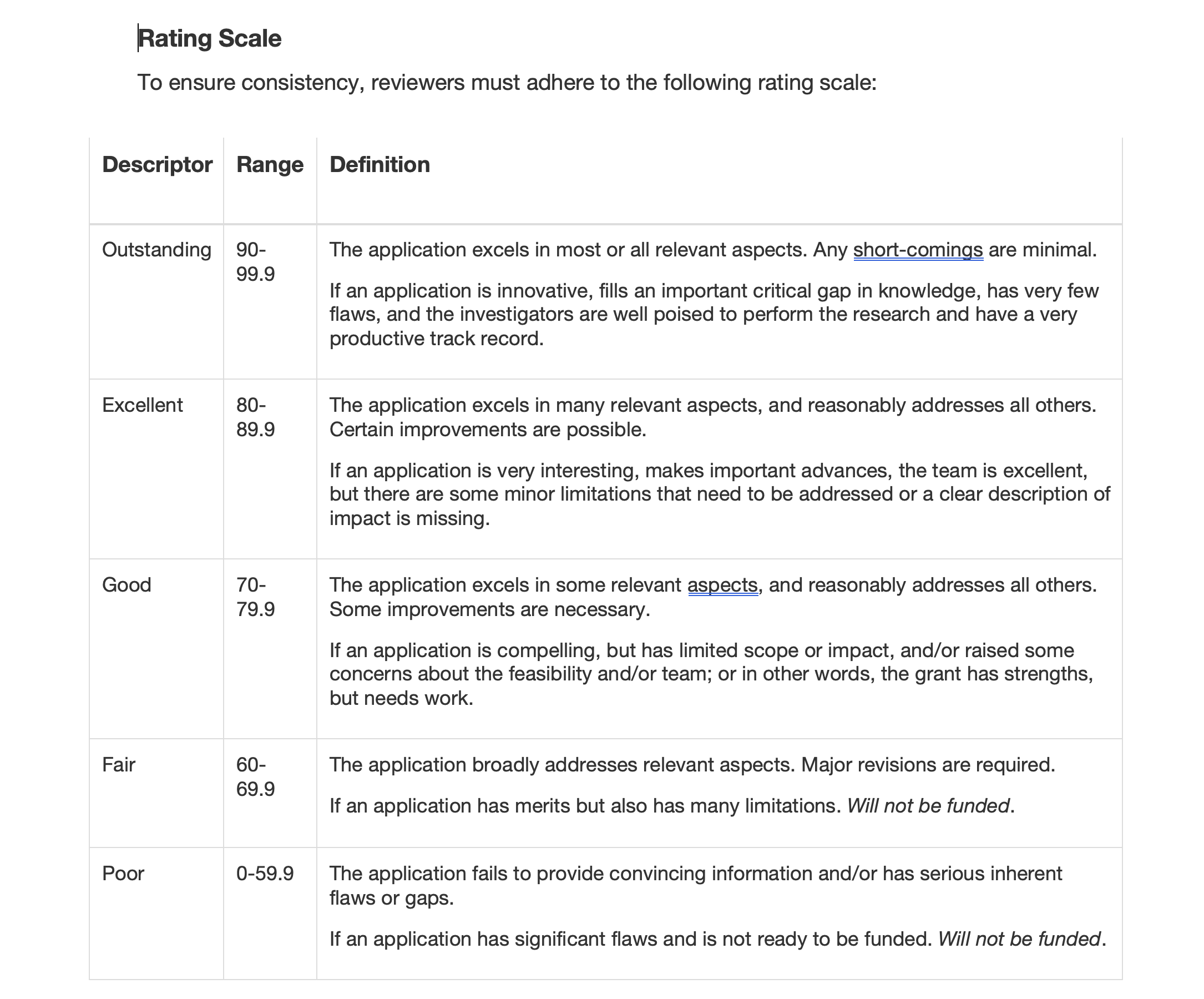
Each reviewer will individually assess their assigned applications ahead of the review meeting. Reviewers should come to the Collaborative Review meeting prepared to discuss the application in detail and provide an assigned score using the WLN’s rating scale. Reviewers will have the opportunity to attend all reviewer meeting(s) and be provided the opportunity to discuss applications for which they are not in conflict. After discussion, the review committee will come to a consensus score on the application. Funds will be awarded to the application(s) collectively ranked highest.
Collaborative Reviewers are also asked to consider:
Merit of the proposed research (consider the application as a whole).
Potential impact (consider how the proposed activities can impact health in the short and long term; what are the practical applications of the proposed activities and knowledge shared).
Capacity (does the community have the human resources to engage in planning and facilitation of the event, and to hold and administer funds).
Feasibility (how doable are the proposed activities in the way they are presented, and in the proposed timeframe).
For more information about the WLN Collaborative Review Process, please see: The WLN Collaborative Review Process 2025 document.
See image below for the WLN rating scale:
Please don’t forget—the WLN core team are available to offer support and answer questions as you prepare your application. Please contact us anytime at wln@dal.ca.